
10 Major U.S. Immigration Updates in 2025 You Should Know (H-1B, Visa Stamping, EB Backlogs, EADs, Students, and Citizenship)
Immigration moved fast in 2025—especially for H-1B workers, employment-based green card applicants (EB-1/EB-2/EB-3), F-1 students, EAD holders, green card holders who travel, and naturalization applicants. Below are 10 major updates (with action steps) that can materially affect your plans.
Disclaimer: This is general information, not legal advice. Every case is fact-specific.

1) DHS changed how H-1B visas are awarded (major cap-selection reform)
On December 23, 2025, the Department of Homeland Security (DHS) announced changes to the H-1B cap selection process, stating that the goal is to “better protect American workers.” This marks a meaningful shift in how H-1B registrations are evaluated and moves the system away from a purely numbers-based lottery approach.
Under the revised framework, DHS and USCIS are increasing focus on job legitimacy, wage alignment, and employer compliance, rather than simply the volume of registrations submitted. The intent is to reduce misuse of the lottery system, discourage duplicative or speculative filings, and ensure H-1B visas are awarded to bona fide specialty occupation roles that reflect real business needs.
For employers, this change signals heightened scrutiny of:
Whether the position clearly qualifies as a specialty occupation
Whether the wage level matches the role, location, and experience required
Whether the employer can demonstrate a legitimate business need and ability to employ the worker as described
What to Do Now
Employers should reassess their H-1B strategy by focusing on quality over quantity, reviewing job descriptions and wage levels early, preparing consistent documentation in advance, and budgeting for increased compliance and review timelines.
2) H-1B “Modernization” rule took effect January 17, 2025 (plus revised Form I-129)
USCIS confirmed that DHS’s H-1B Final Rule officially took effect on January 17, 2025, introducing several important updates to how H-1B petitions are reviewed and processed. The rule is intended to modernize the H-1B program, strengthen system integrity, and reduce misuse, while still allowing limited flexibility for legitimate employers and professionals.
Key changes under this rule include clearer standards for specialty occupation determinations, enhanced review of employer-employee relationships, and updates to filing requirements, including a revised Form I-129. USCIS has signaled closer scrutiny of job duties, wage levels, and consistency across petitions, LCAs, and supporting documents. Employers should expect more detailed review at both the registration and petition stages.
Overall, this rule reflects USCIS’ broader shift toward compliance-driven adjudications, where well-documented, properly structured H-1B cases are more likely to succeed than filings based on outdated templates or generic job descriptions.
What to Do Now
Employers should review and update H-1B templates, job descriptions, SOC code alignment, wage levels, and internal filing checklists to ensure they comply with post-January 17, 2025 standards before filing new or amended petitions.
Source: USCIS
3) NEW: Visa stamping now includes expanded “online presence” / social media review for H-1B + H-4 (effective Dec 15, 2025)
The U.S. Department of State announced that starting December 15, 2025, consular officers will conduct online presence and social media reviews for H-1B applicants and H-4 dependents, expanding a practice that previously applied primarily to F, M, and J visa categories. As part of this process, applicants may be instructed to temporarily set relevant social media profiles to “public” during visa adjudication.
This change reflects a broader shift toward enhanced background screening and identity verification during consular processing. Officers may review publicly available information to assess consistency, credibility, and security-related concerns, including discrepancies between an applicant’s visa application, petition details, professional history, and online footprint.
Importantly, this review is not limited to one platform and may include professional profiles, public posts, affiliations, and online activity that contradicts information provided to USCIS or the Department of State. Inconsistencies—rather than the presence of social media itself—are most likely to trigger additional questioning or administrative processing.
What to Do Now
Applicants should assume that visa stamping includes broader digital review. Review public-facing profiles for consistency with your résumé, employer petition, and visa application. Avoid deleting content in panic; instead, focus on accuracy, consistency, and truthfulness across all materials.
Source: USCIS
Related Nexus Law Instagram Reel: LINK
4) EB-1 / EB-2 / EB-3 priority dates moved in late 2025 (Visa Bulletin “jumps”)
Employment-based green card priority dates saw notable forward movement in late 2025 as FY-2026 began, bringing long-awaited relief for many applicants—particularly those born in India. These movements allowed some applicants to become newly current or significantly closer to eligibility for adjustment of status.
For example, under the October 2025 Visa Bulletin, EB-1 India was listed at 15FEB22, EB-2 India at 01APR13, and EB-3 India at 22AUG13 (Final Action Dates). By the December 2025 Visa Bulletin, these dates advanced to 15MAR22 (EB-1), 15MAY13 (EB-2), and 22SEP13 (EB-3), reflecting steady progress across all three employment-based categories.
While these “jumps” are encouraging, they also underscore the importance of being procedurally prepared. Visa Bulletin movement can be unpredictable, and missing a filing window due to incomplete documentation can result in months—or years—of additional waiting.
What to Do Now
If your priority date is current or approaching current, review your I-485 readiness immediately, including updated I-693 medical exams, dependent documentation, and employer support letters. Each month, also confirm which Visa Bulletin chart (Final Action Dates vs. Dates for Filing) USCIS has designated for adjustment filings before submitting your application.
Source: USCIS
Related Nexus Law Instagram Reel: LINK
5) DHS ended the “automatic extension” of many EAD renewals (effective Oct 30, 2025)
In a significant policy shift, DHS ended the automatic extension of Employment Authorization Documents (EADs) for many renewal applicants, effective for EAD renewal filings submitted on or after October 30, 2025. This change reverses the flexibility that had been in place during prior years to address USCIS backlogs and processing delays.
Previously, eligible applicants could continue working for up to 180 days (or more, depending on category) based on a timely filed EAD renewal and receipt notice. Under the new rule, many applicants can no longer rely on an automatic extension and must instead wait for actual EAD approval before resuming or continuing employment.
This policy change has serious implications for foreign workers, dependent spouses, employers, and HR teams, particularly in categories such as adjustment of status applicants, dependent visa holders, and certain humanitarian classifications. Without careful planning, this shift can result in unexpected work authorization gaps, payroll interruptions, and compliance risks for employers.
What to Do Now
EAD holders should track expiration dates carefully and file renewals as early as permitted. Employers should review I-9 compliance procedures and prepare for possible gaps in work authorization. If your category was previously relying on automatic extensions, proactive legal planning is now essential to avoid disruptions.
Source: USCIS
Related Nexus Law Instagram Reel: LINK
6) Naturalization got tougher: “Good Moral Character” evaluation memo (Aug 15, 2025)
On August 15, 2025, USCIS issued a policy memorandum signaling a more rigorous evaluation of “Good Moral Character” (GMC) in naturalization (N-400) adjudications. While GMC has always been a statutory requirement for U.S. citizenship, this memo clarifies that officers are expected to take a closer, more holistic review of an applicant’s conduct during the statutory period—and, in some cases, beyond.
Under this guidance, USCIS may place greater weight on issues such as tax compliance, criminal history (including minor citations), selective service registration (where applicable), prior immigration violations, misrepresentation, and consistency in residence and travel history. Even issues that previously might not have triggered denial can now lead to additional questioning, requests for evidence, or delays if not properly explained and documented.
This update reinforces that naturalization is no longer a “formality” for green card holders and that pre-filing review and risk assessment are increasingly important.
What to Do Now
Before filing Form N-400, applicants should conduct a full GMC audit, including reviewing tax filings, selective service records, criminal and traffic citations, prior immigration filings, and travel/residence consistency. Addressing potential issues proactively can significantly reduce the risk of delays or denials.
Source: USCIS
Related Nexus Law Instagram Reel: LINK
7) USCIS announced changes to the naturalization test (Sept 17, 2025)
On September 17, 2025, USCIS announced updates to the U.S. naturalization test, marking the first phase of broader changes to how citizenship eligibility is evaluated. These updates affect the civics and English portions of the test and are part of USCIS’ effort to standardize testing and strengthen the integrity of the naturalization process.
While the core structure of the test remains intact, USCIS has indicated that question selection, administration standards, and officer discretion will be more closely aligned with updated policy guidance. Applicants may encounter greater consistency in testing, but also less flexibility in how answers are evaluated, making preparation more important than ever.
Importantly, which version of the test applies depends on when the N-400 was filed, not the interview date. Applicants who prepared under older materials may need to adjust their study approach to ensure compliance with current standards.
What to Do Now
Naturalization applicants should confirm which test version applies to their case, review the official USCIS study materials, and prepare thoroughly for both the civics and English components. Those with pending or upcoming interviews should consider focused preparation to avoid delays or re-testing.
Source: USCIS
Related Nexus Law Instagram Reel: LINK
8) Big 2025 H-1B headline: the $100,000 “Proclamation” fee + implementation guidance
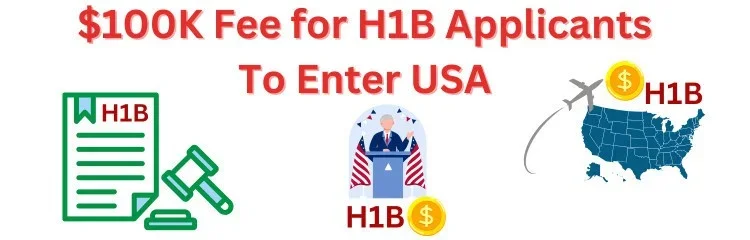
On September 19, 2025, a Presidential Proclamation introduced significant restrictions on the entry and processing of certain H-1B workers, requiring a $100,000 payment to accompany qualifying petitions under specific circumstances. The stated purpose of the Proclamation is to protect U.S. workers and regulate high-volume H-1B usage, but its impact has been immediate and substantial for employers and foreign nationals.
Following the Proclamation, USCIS issued official implementation guidance, outlining how the agency will apply the rule in practice. The requirement does not apply uniformly to all H-1B cases and is highly fact-specific, depending on factors such as the nature of the petition, the employer, and whether the beneficiary is seeking consular processing or entry from outside the United States.
Because this Proclamation affects visa issuance and entry rather than routine extensions alone, it carries heightened risk for individuals who travel internationally, apply for visa stamping, or transition employers while abroad. Improper planning can result in unexpected denials, delays, or significant financial exposure.
What to Do Now
If your H-1B case involves consular processing, international travel, or filing from outside the U.S., obtain case-specific legal guidance before taking action. Employers and employees should not assume this fee applies—or does not apply—without a detailed legal review.
Source: The White House, USCIS
Related Nexus Law Instagram Reel: LINK
9) Students & exchange visitors: expanded visa screening/vetting guidance (June 18, 2025)
On June 18, 2025, the U.S. Department of State announced expanded screening and vetting measures for certain visa applicants, with a notable impact on F-1 students and J-1 exchange visitors. This update builds on prior security protocols and reflects a broader move toward enhanced identity, background, and credibility review during consular processing.
As part of this expansion, consular officers may conduct a more comprehensive review of an applicant’s online presence, academic background, and program intent. Officers are increasingly focused on verifying consistency across the DS-160, Form I-20 or DS-2019, SEVIS records, academic plans, funding sources, and public online profiles. Even minor discrepancies can result in additional questioning or administrative processing delays.
While these measures do not mean that student or exchange visas are harder to qualify for substantively, they do mean that preparation and accuracy are critical. Applicants should be ready for more document requests and longer processing times, especially during peak visa seasons.
What to Do Now
Students and exchange visitors should expect heightened scrutiny and possible delays. Carefully review your DS-160, school or sponsor documents, and public online profiles to ensure consistency. Be prepared to clearly explain your academic or exchange plans and return intent if questioned.
Source: state.gov
10) Green card holders who travel: longer absences = more questioning at reentry (and naturalization risk)
CBP reiterated that staying outside the U.S. for more than 6 months but less than 1 year can trigger additional questioning on return. CBP Help Center USCIS also emphasizes maintaining permanent residence and avoiding abandonment issues—especially relevant if you later apply for citizenship. USCIS+1
What to do now: If you anticipate extended travel, consider reentry permit strategy and document your U.S. ties (job, lease/mortgage, taxes, family, etc.).
Related Nexus Law Instagram Reel: LINK
Click here to schedule a complimentary 15-minute immigration consultation to discuss your case and potential strategies under current U.S. immigration rules.
This article is a service of Nexus Law, PLLC, an immigration and business law firm based in Bellevue, Washington. We help individuals, families, students, and employers navigate complex U.S. immigration rules and policy changes with clarity and confidence. If recent USCIS or DHS updates may affect your visa, green card, travel, or work authorization, we invite you to schedule a complimentary 15-minute consultation to discuss your options and next steps.
This content is provided for general educational and informational purposes only and does not constitute legal advice. Immigration laws and policies change frequently and are highly fact-specific. Reading this article does not create an attorney-client relationship. For legal advice tailored to your individual circumstances, consult a qualified immigration attorney.