
If Something Happened to You Tonight, Would Your Child Be Protected?
(Many parents assume a child would automatically stay with the family during an emergency. Under Washington law, that is not always guaranteed without proper guardianship documentation.)
Disclaimer: This article is for general educational purposes only. It is not legal advice. Outcomes depend on individual facts and circumstances.
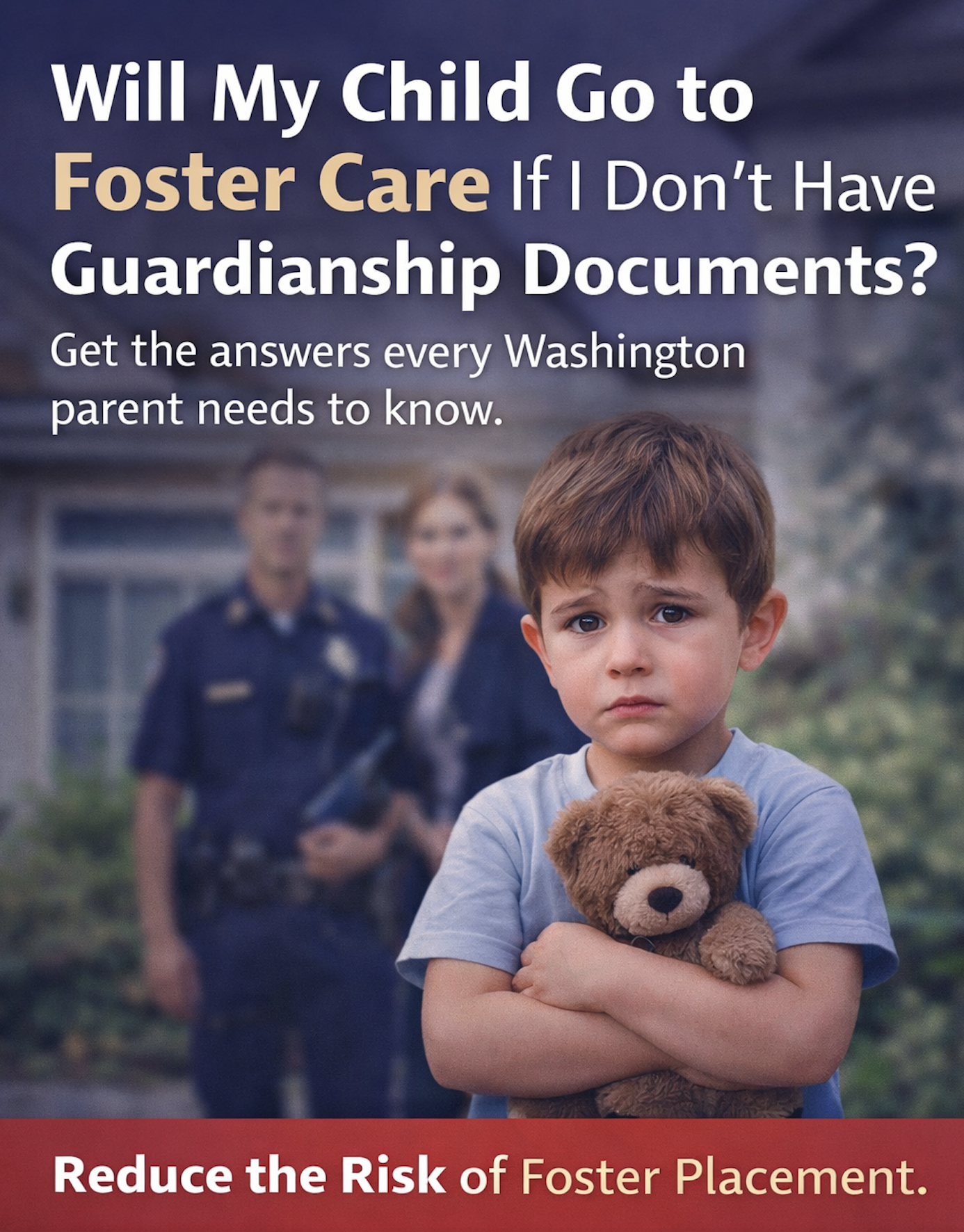
Emergency Guardianship Planning: What Every Parent Should Know
Many parents assume their child would automatically stay with family during an emergency.
In reality, that is not always guaranteed under Washington law.
If both parents suddenly become unavailable — due to an accident, hospitalization, or another unexpected event — and no guardianship documents are in place, delays and legal uncertainty can follow.
Planning ahead helps ensure the right person can step in immediately.
What could happen without Proper Documentation:
Without clear legal authorization:
• Schools may refuse to release your child
• Medical decisions may be delayed
• Relatives may not have legal authority to help
• Courts may need to intervene
• Temporary state placement can become possible in some situations
Foster care is not automatic — but lack of planning increases risk.
What Parents Should Have:
A few key documents can help prevent these issues:
• Guardian nomination – names who should care for your child
• Emergency caregiver authorization – allows a trusted adult to act temporarily
• Clear custody consent language – reduces delays in urgent situations
• Trust planning for minor children – ensures financial protection if needed
These documents allow the people you trust to step in quickly when it matters most
What to keep in mind:
Planning is not about fear — it is about control and clarity.
The right documents can prevent confusion during an already stressful moment and help ensure your child is cared for by the people you choose.
For parents with minor children, a simple plan today can prevent serious complications tomorrow.
Click here to schedule a consultation to discuss your case and potential strategies under current U.S. and other applicable laws.
This article is a service of Nexus Law, PLLC, an immigration and business law firm based in Bellevue, Washington. We help individuals, families, students, and employers navigate complex U.S. immigration rules and policy changes with clarity and confidence. If recent USCIS or DHS updates may affect your visa, green card, travel, or work authorization, we invite you to schedule a complimentary 15-minute consultation to discuss your options and next steps.
This content is provided for general educational and informational purposes only and does not constitute legal advice. Immigration laws and policies change frequently and are highly fact-specific. Reading this article does not create an attorney-client relationship. For legal advice tailored to your individual circumstances, consult a qualified immigration attorney.